

Alvin’s Transformation: Burrowing Into Hamster Care!

Hi friends,
It’s me...Alvin!
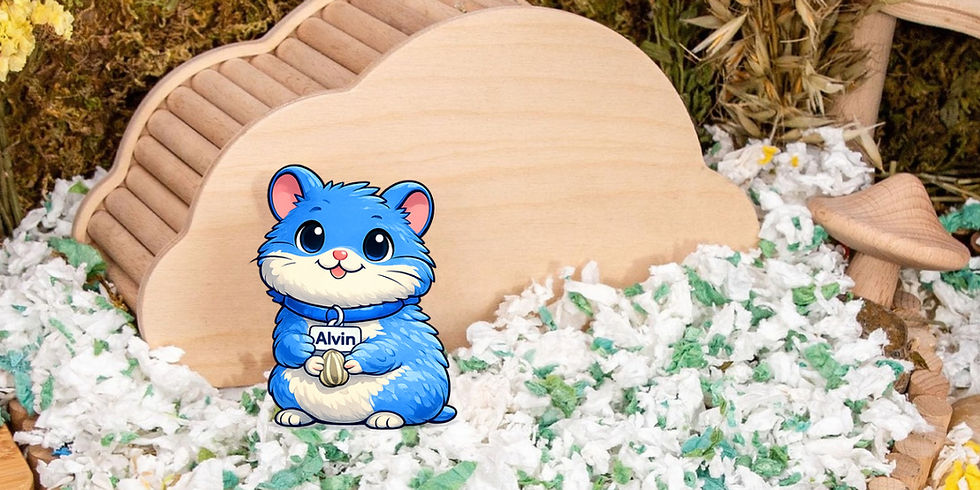
I’m back with another adventure on my mission to learn how to care for different animals by transforming into them! This time, with a wiggle of my gills, a little magic, and one tiny POOF!...I transformed into a hamster. 🐹
At first, I thought this transformation would be easy. I’m tiny now, so surely I just need a tiny cage, a little wheel, some food, and a cozy place to sleep...right?
Well, I quickly learned that tiny animal does NOT mean tiny needs!
I wanted to dig, burrow, forage, run, hide, chew, and explore, but my little setup didn't give me nearly enough room to do all of that. Apparently, hamsters can be pretty busy little creatures when the rest of us are asleep!
Thankfully, the amazing team at Animal Medical Center stepped in to teach me what a happy, healthy hamster home should really look like.
Here are some of the important things I learned:
🏠 Bigger is Better: Hamsters need much more space than many of the small cages traditionally marketed for them provide. A large enclosure measuring at least 450 square inches with plenty of uninterrupted floor space gives me room for deep bedding, hides, a wheel, enrichment, and all of my late-night hamster activities. When choosing an enclosure, bigger is generally better!
🛏️ Let Me Burrow: In the wild, hamsters create extensive underground burrows, so digging isn't just something I do for fun, it's an important natural behavior! I need a generous layer of safe bedding that is deep enough, ideally 6-8 inches, to create tunnels and nests. Paper-based bedding and aspen are commonly used options, while aromatic wood bedding such as cedar should be avoided.
🏃 I Have Places to Be: I may only be a few inches long, but apparently I have a VERY busy schedule. A properly sized exercise wheel lets me run to my little hamster heart's content! My wheel should be have a solid running surface and be large enough that I can run comfortably without my back curving or arching, which is typically 10-12 inches in diameter.
🏖️ Don't Forget My Sand Bath: Hamsters generally shouldn't be bathed in water. Instead, providing an appropriate sand bath gives me another way to groom myself and helps keep my coat clean. Plus, digging and rolling around in sand is pretty fun!
🏡 Give Me Places to Hide: Being tiny means I naturally feel safest when I have somewhere to disappear. Multiple hides, tunnels, cork logs, cardboard tubes, and other covered spaces can help me feel secure while making my habitat much more interesting to explore.
🦷 Chewing is Important: My teeth continue to grow throughout my life, so safe things to chew are a must! Appropriate wooden chews, cardboard, and other hamster-safe materials give me an outlet for natural chewing behavior and help keep me busy.
🌾 Make Me Work for Dinner: A bowl may be convenient, but hamsters are natural foragers! Scatter-feeding some of my food throughout my enclosure encourages me to sniff, search, dig, and explore. Food can also be tucked into safe cardboard toys or other enrichment items to make me use my brain while I find my dinner.
🥕 Feed Me a Balanced Diet: Hamsters need more than a bowl full of seeds and treats. A nutritionally balanced hamster diet should make up the foundation of my meals, with appropriate fresh foods and treats offered in moderation. And because I'm a hamster, I may immediately stuff dinner into my cheek pouches and carry it somewhere else. That's completely normal, I have important hamster business to conduct!
🌡️ Keep Me Comfortable: Hamsters do best in a stable, comfortable indoor environment away from drafts, direct sunlight, and extreme temperatures. My enclosure should also stay dry and well ventilated.
🌙 I'm a Night Owl: If I spend most of the day snoozing, don't worry! Hamsters naturally tend to be most active during the evening and nighttime hours. Waking me up repeatedly during the day can be stressful, so it's best to let me get my beauty sleep and interact with me when I'm naturally awake.
🐹 I Prefer My Own Company: Hamsters aren't all the same, and social needs can vary by species, but almost all species of hamsters should live alone. Sharing an enclosure can lead to serious fighting, even if two hamsters seemed to get along when they were younger. Sometimes being a good hamster friend means having separate houses!
Once my habitat had plenty of room to burrow, run, hide, forage, chew, and explore, I finally understood just how much goes into creating a good home for such a little animal.
And I learned another important lesson along the way: A pet's size doesn't determine how much care, space, or enrichment they need.
Hamsters may be small, but providing opportunities to express their natural behaviors is an important part of keeping them healthy and happy.
If you have a hamster, or you're thinking about bringing one home, our team at Animal Medical Center is always happy to help you learn more about proper husbandry, nutrition, and preventative care.
As for me? I think I've done enough running for one night. I'm off to stuff my cheeks, rearrange my entire enclosure at 2:00 a.m., and then sleep through tomorrow.
Who knows what I'll transform into next?
Stay curious,
Alvin 🐹

